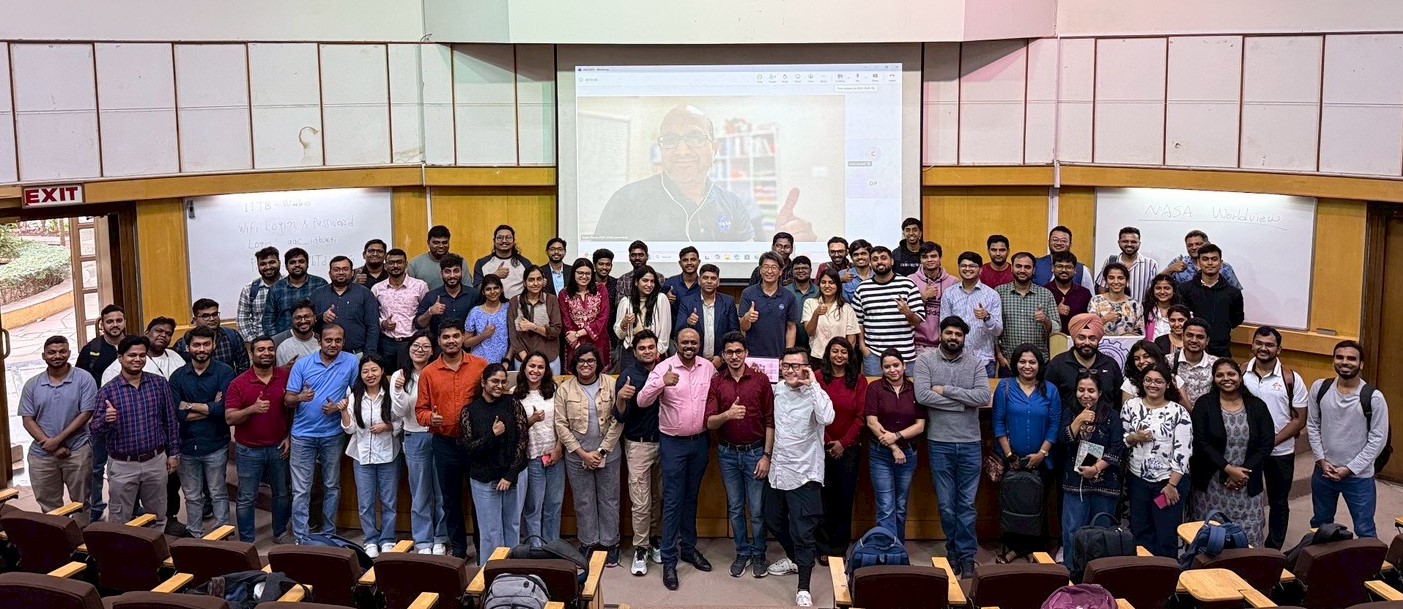
A pre-conference workshop on Remote Sensing of Atmospheric Aerosols and Air Quality was successfully held in Mumbai on the 30th of November, 2025, as part of the Asian Aerosol Conference (AAC) 2025, bringing together more than 70 participants from academia, research institutions, and environmental monitoring agencies.
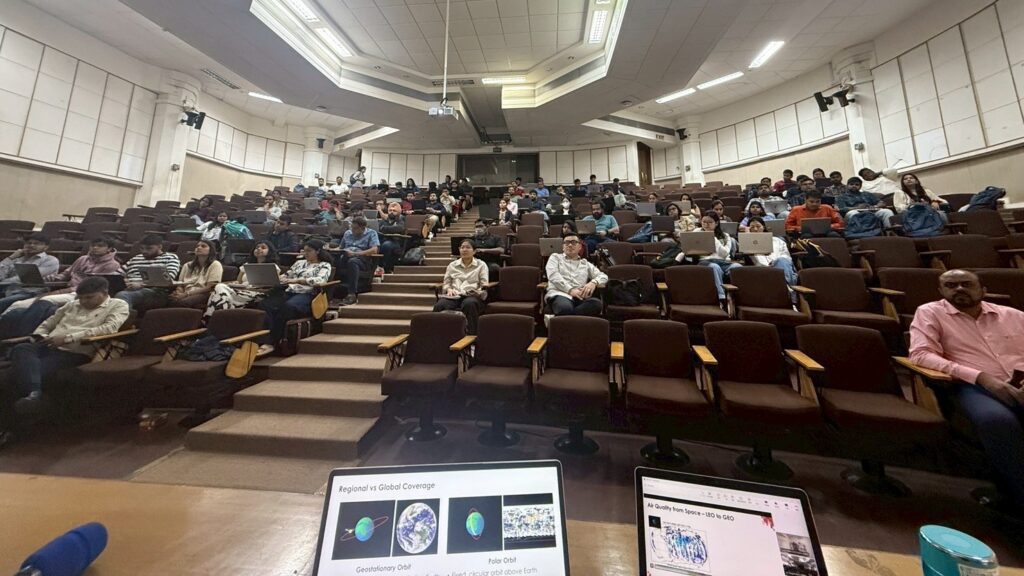
The one-day intensive training workshop focused on advancing participants’ understanding of satellite- and surface-based remote sensing techniques for atmospheric aerosols, with a strong emphasis on applications in air quality monitoring and forecasting systems. The program was designed to bridge theory and practice, equipping attendees with both conceptual knowledge and hands-on technical skills.
The workshop was led by a distinguished panel of instructors: Dr. Pawan Gupta from NASA Goddard Space Flight Center, who joined the event online; Dr. Sheng-Hsiang (Carlo) Wang from APAC, National Central University (NCU); and Dr. Divya Prakash from Poornima University, Jaipur. Together, they provided comprehensive insights into the latest developments in aerosol remote sensing and data-driven air quality analysis.
Key sessions covered a wide range of satellite platforms, including MODIS, VIIRS, PACE, and geostationary satellites, highlighting their roles in observing aerosols and supporting air quality assessments at regional and global scales. These satellite observations were complemented by detailed discussions on ground-based measurements from the AERONET (Aerosol Robotic Network), including instrumentation, calibration procedures, data products, and interpretation techniques.
A major highlight of the workshop was its strong practical component. Participants engaged in hands-on exercises involving data downloading, visualization, and analysis using both online portals and offline tools. Special emphasis was placed on the use of Python-based Jupyter notebooks, enabling participants to develop reproducible workflows for integrating satellite data with surface observations.
By the end of the program, attendees had gained essential skills to effectively combine satellite and ground-based datasets for aerosol research, air quality monitoring, and forecasting applications. The workshop not only strengthened technical capacity among early-career researchers and practitioners but also fostered collaboration and knowledge exchange ahead of the main AAC 2025 conference.
The event underscored the growing importance of remote sensing technologies in addressing air quality challenges across Asia and beyond, reinforcing AAC 2025’s commitment to advancing aerosol science and its applications.


Leave a Reply